Why does the Duomo Museum’s wooden cathedral differ from Milan’s Duomo?

Inside Milan’s Duomo Museum stands a wooden cathedral large enough to make a visitor look up. Its front does not match the marble façade across the square. That discrepancy is one of the best reasons to stop. The Modellone helped people think about a building that was still changing. One part of it can show what a designer proposed even though a visitor walking around the finished cathedral will search in vain for that particular arrangement.
Begin at the scale of a person
The cathedral works authority dates the model to a span from 1519 to 1891. At a scale of one to twenty-two, it is more than five metres tall and nearly eight metres deep. Imagine how different that made it from a model small enough to turn in one hand. A maker could work on one bay at close quarters. A colleague could stand back to judge the mass of the entire building. The Duomo Museum’s object introduction gives the measurements and identifies the makers collectively.
Try those two distances yourself, within the gallery’s available space. Start by following the long side until you can distinguish repeated bays. Then choose a single arch or pinnacle and let the surrounding detail go out of focus. A photograph that fits the whole object into the frame may lose the joints or the carving that explain how it was made. The museum’s descriptive orientation guide is another way to approach an object whose size can be difficult to convey in a photograph.
Think of wood as a working material
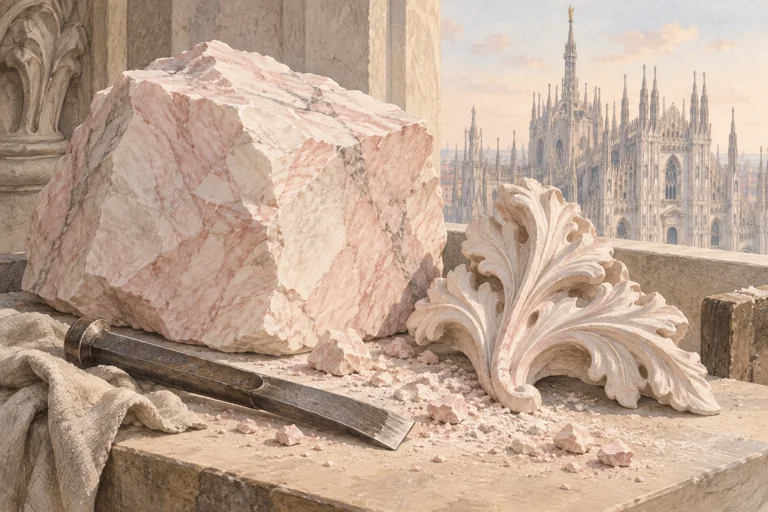
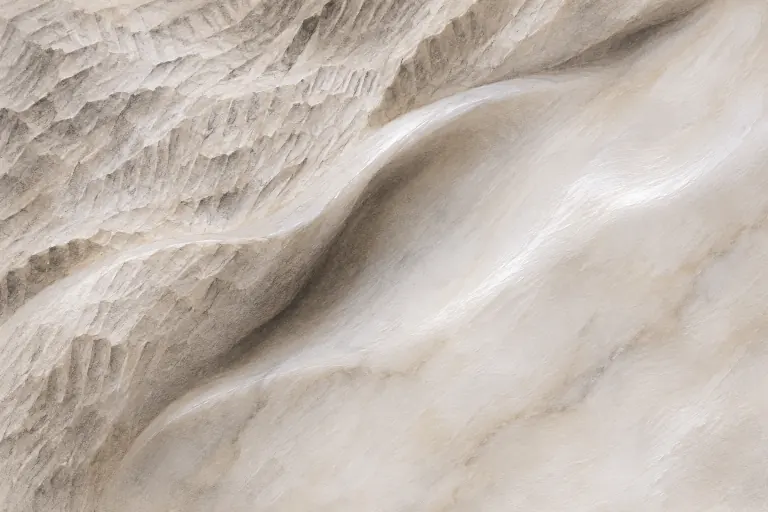
The Modellone includes linden, walnut and Swiss pine with additions in fir. On the cathedral outside, Candoglia marble gives the great surfaces their changing gray and pink tones. In the museum, the wood makes other things visible. A small element could be fashioned away from the rest, brought to the model and fitted into position. When a project changed, people could take part of the model apart. The scale and choice of material made it possible to compare ideas in three dimensions alongside drawings.
Between 1841 and 1846 Giuseppe Bellora dismantled the structure to repair damaged parts. He also added bays from the façade end, spires and other architectural features. In other words, a campaign described as restoration forms part of the model’s own design history. If you spot a difference between sections, resist the urge to assign each shade of wood a century. Color can tell you where to look. The collection record gives you a firmer basis for identifying a documented intervention.
Compare the façade with the square
The model incorporates Giuseppe Brentano’s unbuilt neo-Gothic proposal of 1888. Think about what it means for a discarded proposal to survive at this scale. In a drawing the front is bounded by the edge of the sheet. Here it has to join the sides of a cathedral. You can look along the upper edge or back toward the nave and ask whether the proposal seems to continue the lines already established behind it.
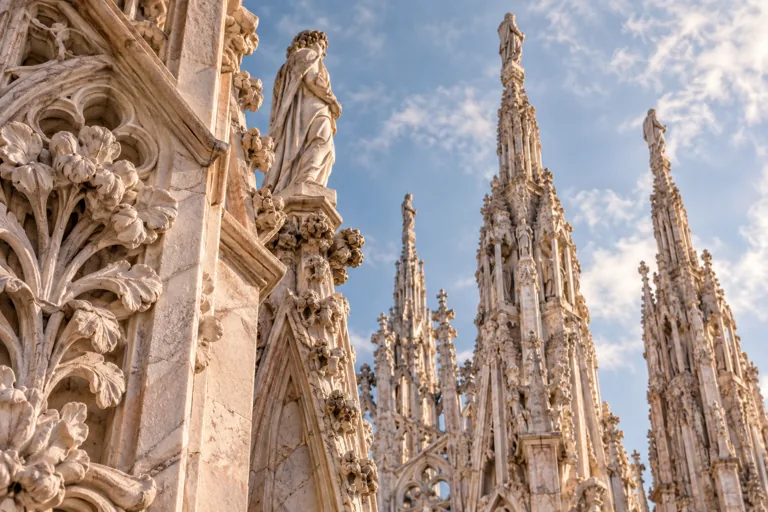
Take one observation out into Piazza del Duomo. It might be the shape of the roofline, a repeated opening or the way a front seems to step upward. Compare only that feature with the building first. The guide to reading Milan Cathedral can help you break down what initially looks like an overwhelming surface. Our guide to the cathedral’s pink-white marble follows a separate question that becomes particularly vivid after looking at all that timber.
Give the museum its own place in the itinerary
Check which spaces your ticket includes and which entrances and opening times apply to your date. The museum, cathedral interior and terraces offer different views of the project. A rooftop appointment can anchor the day while the model supplies a sheltered period of concentrated looking. For that combination, consult the Duomo rooftop guide and reserve time to cross the square instead of timing the two entrances as if they were the same door.
The Duomo collection can help a group choose its priority. A child who likes construction might quite reasonably prefer time with the model to a longer architectural commentary outside. Ask each person to find one feature they would keep if they were building a smaller model at home. Answers tend to reveal which parts make the cathedral recognizable and which details belong to a plan Milan never carried out.
Sources & further reading
Turn a good read into a great day.
Find a highly rated Milanese experience that brings these stories to life.
Explore related experiences →