Milan’s San Nazaro in Brolo: how do you read a church through its changing entrances?

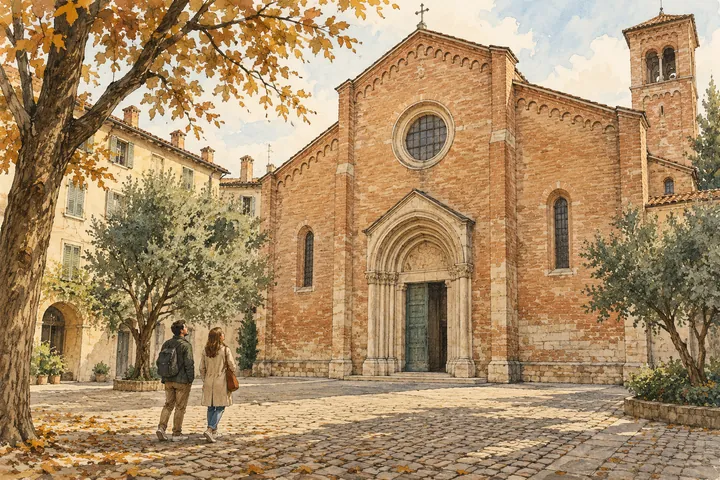
At San Nazaro in Brolo, the entrance itself is an invitation to think historically. You approach an ancient Christian foundation through architecture added much later. That small complication makes the church rewarding: the building does not present one moment neatly preserved. It asks you to move through several decisions about worship, memory and the way people enter a sacred space. Begin outside, without trying to assign a date to every brick.
The Milan Archaeological Museum’s early Christian itinerary places the foundation between 382 and 386, during the episcopate of Ambrose. Originally associated with the Apostles, the basilica stood beyond the city walls along the route towards Rome. Those facts establish its importance, but they do not make every part of the church visible today fourth-century work. A foundation date describes a beginning; it is not a label that can be pasted over a whole building.
Let the entrance slow you down
The later Trivulzio chapel stands before the church. The Lombardy cultural heritage record associates this funerary project with Bramantino and describes the relationship between its outer form and its octagonal interior. Rather than rushing through it as an inconvenient vestibule, notice how an added space changes your approach. You have already crossed one architectural threshold before entering the basilica beyond. Movement becomes part of the monument’s history.
Ask a simple question: what would be different if this intermediate space were absent? The answer is an interpretation of how the building feels, not proof of what every visitor in an earlier century experienced. Keep those two kinds of statement separate. A family memorial could alter a public religious approach, but specific motives and ceremonial uses need documentary evidence. Looking carefully is valuable precisely because it can lead to better questions rather than instant certainty.
Read a plan through the space you can see
The early basilica’s cross-shaped arrangement helps explain why this foundation appears in accounts of Milan’s Christian topography. Once inside, if visiting is permitted, look at the relationship between the main axis and the transverse spaces. You need not produce an architectural drawing. Notice where views open, where the scale changes and where later furnishings direct attention. The current church is also a place of worship, so a service takes precedence over a visitor’s preferred route.
Our guide to Sant’Ambrogio’s courtyard and towers offers a different way to notice how a sacred complex is approached. Comparing two churches can sharpen your observation, provided you resist making them stand for the same century or architectural story. A shared association with Ambrose does not mean identical surviving fabric. Each building deserves its own sequence of questions and its own current access check.
Archaeology is not automatically an open room
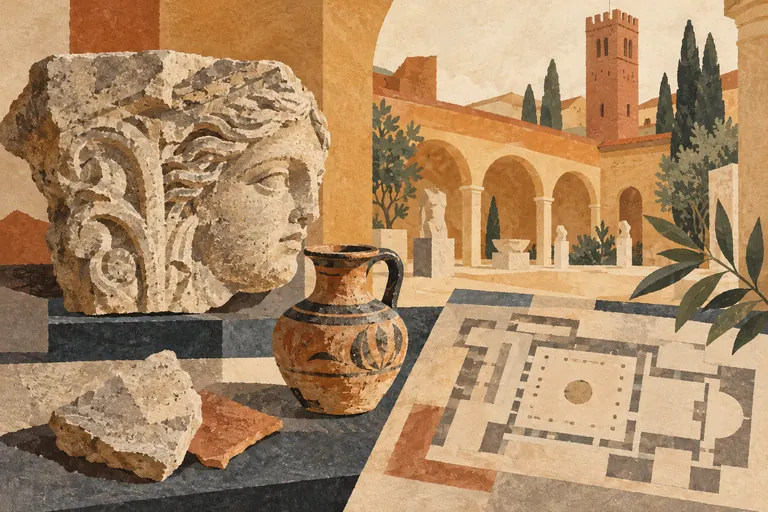
The civic museum’s itinerary discusses archaeological evidence associated with San Nazaro, including areas around the old sacristy. That is a reason to be interested, not a promise that a visitor can enter an excavation whenever the church is open. Ask the venue about the actual public route, any separately arranged visit and whether the spaces you hope to see are accessible on your date. Do not follow a staff door simply because a plan mentions remains behind it.
This distinction is useful elsewhere in Milan. At the nearby Ca’ Granda, a hospital’s history now meets the life of a university, and access follows present-day use. The historic interest of a building does not turn every room into a museum. Bring curiosity and a little flexibility: an exterior or nave visit can still be worthwhile when a specialist area is unavailable.
Take the steps seriously
The official YesMilano accessibility account describes steps on the main approach and changes of level on alternative routes and inside. Do not read the existence of a side entrance as a blanket step-free promise. If stairs, door widths or assistance matter to your party, contact the venue for the current route and explain what you need. Historic access descriptions are a starting point for a conversation, not a substitute for confirmation.
A small bag and quiet shoes make any church visit more comfortable, but courtesy matters more than equipment. Keep circulation clear, follow photography notices and avoid using a phone conversation as a soundtrack. You can compare later architectural layers with San Simpliciano on a separate part of your Milan stay. In Verona, San Lorenzo offers another compact church where close looking rewards patience, though its history and access arrangements are entirely its own.
Build a modest visit around one good question
Finish outside by looking back at the entrance again. It should now seem less like a single doorway and more like the result of successive choices. If you want broader context, compare options in our Milan history collection, checking the stated route and admissions rather than assuming a general walk includes interior or archaeological access. San Nazaro works especially well when you let one question guide you: how has this place changed the way people approach it?
Sources & further reading
Turn a good read into a great day.
Find a highly rated Milanese experience that brings these stories to life.
Explore related experiences →