Milan’s Palazzo Morando: how do city paintings and costume displays tell different stories?

At Palazzo Morando, a painted street and a garment can both speak about Milan, but they do not offer the same evidence. A city view selects a place and a viewpoint; clothing raises questions about bodies, work, occasion and preservation. Visit with that difference in mind and the museum becomes more than an attractive stop in the fashion district. It offers two ways of asking how a city represents itself.
The municipal museum page checked on 22 October 2026 identifies the address as Via Sant’Andrea 6. It also carries an immediate practical notice: normal opening of the exhibition rooms is not guaranteed between 10:00 and 13:00 on Thursday 22 October because of a union assembly. This is not a blanket all-day closure announcement. Confirm arrangements directly before making a special journey.
Begin by asking what a city view leaves out
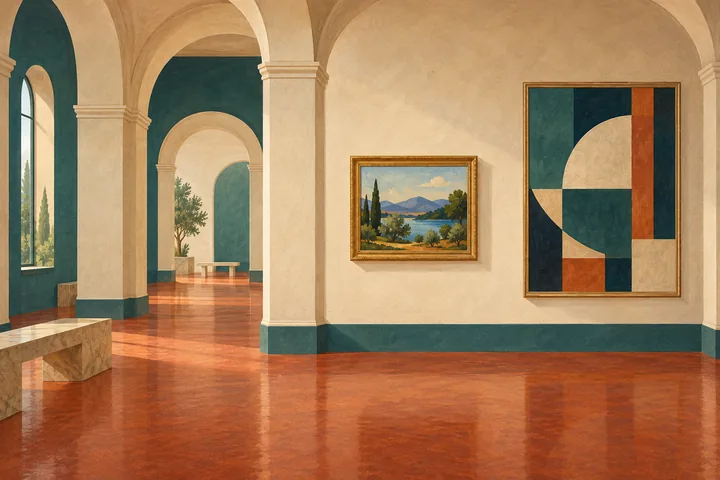
Choose one painting rather than trying to recognise every location. Where has the painter placed you? Look at the relationship between the buildings and the people, then consider what sits outside the frame. A carefully composed view can be useful historical evidence without functioning like a neutral street survey. Read its date and description before comparing it with the city you walked through that morning.
The museum presents Milan’s urban and social development from the late seventeenth to the early twentieth century. You need not memorise that whole period to make a productive comparison. One doorway, a pattern of movement or a conspicuous absence can supply a question. Our Galleria guide offers another way to think about architecture as a stage for city life.
Treat the palace as another part of the evidence
The decorated rooms add their own visual language. Pause to distinguish the object you are studying from its surroundings. A frame, a wall treatment and the route through adjoining rooms can all affect your impression, but they may belong to different moments. Do not assume that every object now displayed in a historic interior was originally commissioned for that exact space.
Palazzo Morando came to the city through Lydia Caprara Morando Attendolo Bolognini’s donation in 1945. That change from residence to public museum is a useful question in itself: what happens when a domestic setting becomes a shared collection? For a different Milanese example, our Boschi Di Stefano house-museum guide considers the relationship between rooms and art.
Expect a selection of clothing, not a complete wardrobe
The municipal account describes a costume and fashion collection spanning several centuries, with displays rotating for conservation and study. A collection’s holdings are therefore not a promise that a particular dress will be visible on your date. Check the current exhibition information and let the works actually on view shape the visit.
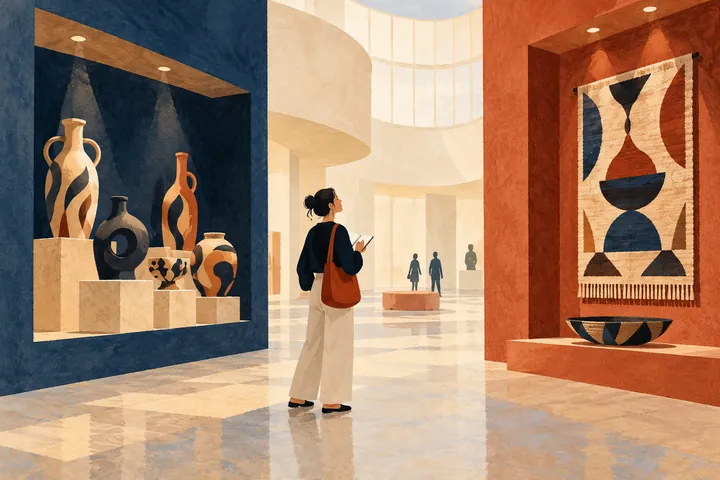
When a garment is displayed, begin with its construction and presentation. Which features can you see clearly, and which remain hidden by the mounting? A museum label may explain materials or use, but appearance alone cannot establish who wore an object or how frequently. Resist filling gaps with an imagined elegant owner. The unanswered question can be more interesting than a tidy invented story.
Keep fashion history distinct from fashion access
A museum visit in the Quadrilatero does not provide entry to a runway show, an invitation or backstage access. Nor does an expensive-looking garment demonstrate that everyone in the city dressed that way. Consider whose experiences survive through collecting and whose may be harder to recover. This makes the clothing more useful as evidence without making the visit solemn or forbidding.
If you are continuing to Venice, Palazzo Mocenigo supplies another setting for looking at dress and social life. Compare the questions the museums ask, rather than ranking them by the number of garments you happen to see. A changing display can reward attention precisely because it is selective.
Leave space for the actual opening arrangements
The regular municipal listing gives Tuesday–Sunday opening, 10:00–17:30, last entry 17:00, with free admission. The dated assembly notice above takes priority over treating that pattern as a guarantee today. Recheck notices for future dates too. If you need a particular access arrangement, ask about the current visitor route instead of inferring it from the building’s central location.
Our Galleria-to-Brera walk can help you shape the wider day, while the Milan experiences collection lets you compare guided options and their stated inclusions. Leave with one city image and one object question in mind. You will have done something more rewarding than merely passing through a fashionable address.
Sources & further reading
Turn a good read into a great day.
Find a highly rated Milanese experience that brings these stories to life.
Explore related experiences →