Milan’s Biblioteca degli Alberi: how do you read a park as a botanical library?

At Milan’s Biblioteca degli Alberi, the word “library” suggests a useful way to walk. You can select a few subjects, compare them and return to something that deserves another look. The collection happens to be alive: trees, grasses and planted beds arranged within Porta Nuova’s urban landscape. Give the plants your first attention and let the skyline remain a background. You may leave knowing three trees better instead of having photographed every tower.
Understand the collection before following a route
BAM’s official project account identifies the park’s designer as Inside Outside, led by Petra Blaisse, and places it within the Porta Nuova development. Its botanical collection guide describes circular groves, perennial planting, shrubs, aquatic plants and other groups. This is a deliberately organised urban garden, whose variety can be explored without treating the park as a miniature wilderness.
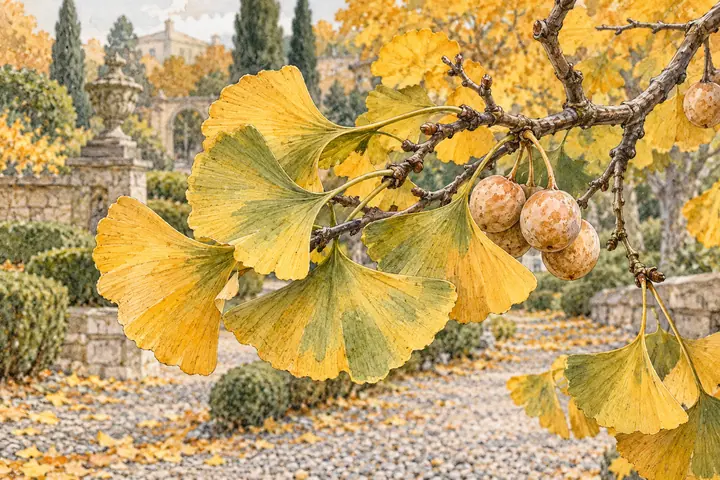
Start with the official map and choose two or three nearby subjects. A modest route is especially useful when the weather is uncertain or you have limited daylight. The collection list includes ginkgo, Himalayan birch and swamp oak, among many others. Use the labels and botanical information to confirm an identification; resemblance to a tree you know at home is a starting hypothesis, not proof.
Read a tree through more than its leaves
Pick one tree and look from the path at its overall form. Does the crown spread broadly or rise narrowly? Where does the trunk divide? How does the canopy relate to neighbouring trees? Then move your attention to bark, branching and any leaves still visible. A November visit can make structure easier to notice even when a summer photograph suggests a different appearance.
Compare a second tree using the same questions. The point is not to rank them by beauty but to notice how many ways a tree can occupy space. If you enjoy making notes, write one sentence for each before reading further. A description such as “pale trunk with a finely divided outline” gives you something to test against the name and official information afterwards.
Do not strip leaves, bark or seeds to make the exercise more tangible. Looking from the permitted route is enough, and the park’s planting needs to remain intact for other visitors and its own living community. A close photograph can serve as a reminder, provided you do not step into beds or block people moving through the paths.
Use the rose garden to think about more than flowers
The official rose-garden description presents the Roseto as an oasis for insects and butterflies, combining roses with other plants and two insect hotels. It also states that the plants have name labels. That makes the space a useful place to compare a horticultural display with the habitat it is intended to support.
A November visit should not be planned around a guarantee of peak bloom or visible butterflies. Ask instead what remains available to observe that day: plant structure, the arrangement of beds, the information on labels and the relationship between different kinds of planting. A garden’s seasonal changes are part of its subject. An empty-looking stem is not evidence that the visit has failed.
Look for the work that keeps a collection alive
BAM’s nursery description explains that its nursery supports the growth of plants used for maintenance and replacement in the perennial gardens, as well as activities involving care of green space. This is a reminder that a planted design is continually maintained. A mature landscape does not remain identical to its opening-day plan without ongoing work.
Respect temporary barriers and give maintenance teams room. If a path or bed is unavailable, choose another part of the collection rather than treating the interruption as a reason to cross the boundary. The park is also used by people commuting, exercising and meeting friends. Botanical curiosity works best when it fits around those everyday movements.
Separate a public walk from an organised activity
The current BAM programme lists cultural and wellbeing activities, but an event listing has its own date, location and participation conditions. Check those details if you want to join something. An independent park walk does not reserve a place in a guided activity, and an older programme page should not be read as this month’s calendar.
Use BAM’s accessibility information for the relevant route and services, and confirm any specific needs. Our Milan transport guide helps with the journey. For another botanical setting, compare our Brera garden article; for a different use of landscape, read the Portello guide. Florence’s Giardino dei Semplici offers a further comparison on a longer journey. Browse Milan walking experiences by their actual routes. At BAM, three accurately noticed plants can be a satisfying chapter of the city.
Sources & further reading
Turn a good read into a great day.
Find a highly rated Milanese experience that brings these stories to life.
Explore related experiences →