Sforza Castle: a fortress, court and museum in one Milan landmark
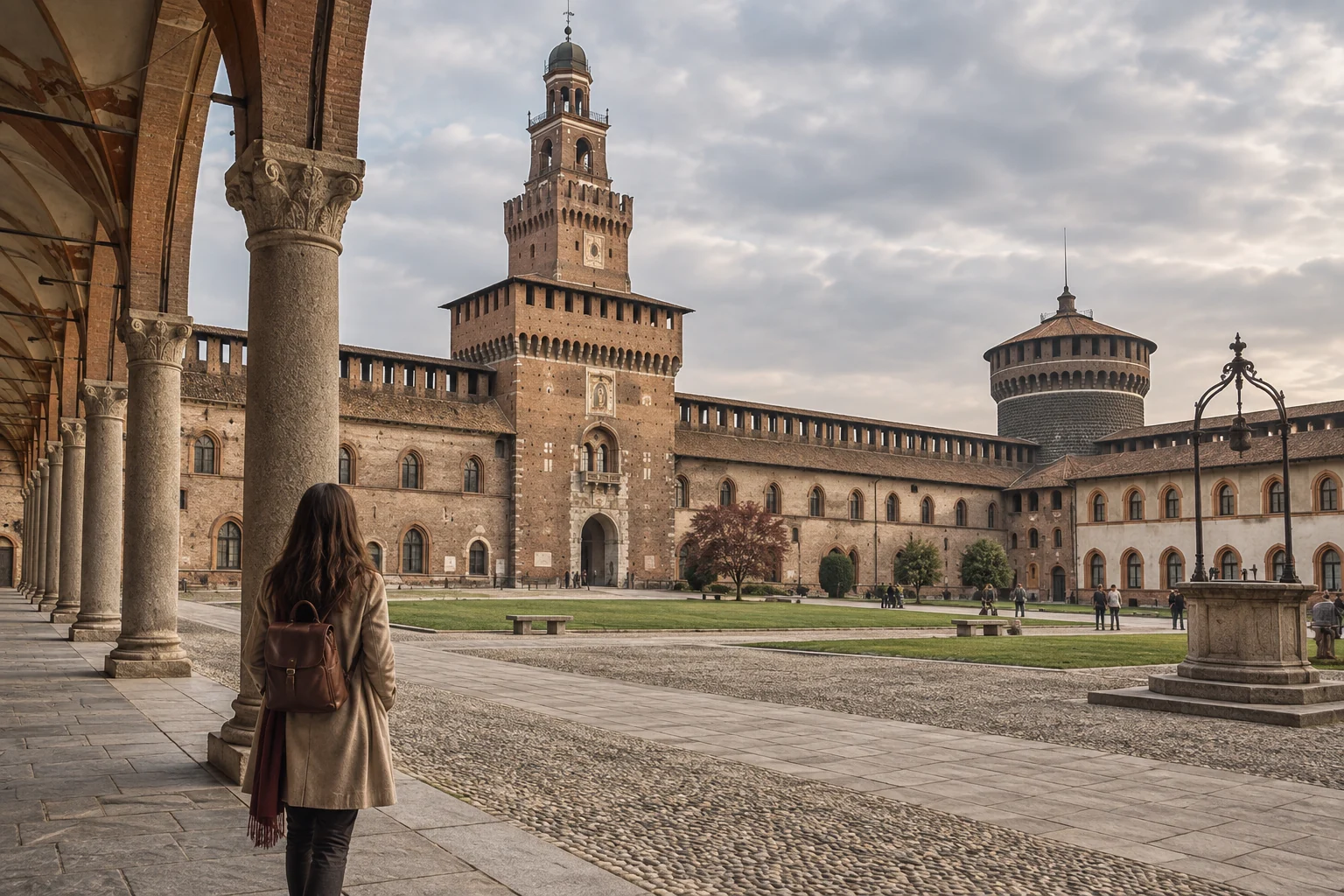
Sforza Castle is easier to enjoy when you stop asking it to be only a castle. Its walls suggest defense, its courtyards suggest ceremony, and its museums invite concentrated looking at objects made for very different settings. Those roles do not cancel one another. Together they make the complex a useful place to think about how a city repeatedly gives an old building new work to do.
Begin outside with the scale of the whole, then move toward the parts you have chosen to visit. Resist treating every doorway as a task. Decide whether your main interest is architecture, a particular collection or a walk that continues into the park. A clear intention helps an extensive site feel generous rather than exhausting, especially after another major attraction earlier in the day.
Separate the building’s different lives
The municipal castle history describes a Visconti fortress, rebuilding under Francesco Sforza, later military use and the transformation into a museum setting through restoration. That outline gives you a way to look for change. The present appearance is a historical result, not a single moment preserved without alteration.
Ask what different users would have needed from the same space. A defensive entrance, a ceremonial approach and a museum route organize movement for different reasons. You do not need to identify every phase by eye. Simply noticing how a passage channels people or how a courtyard creates a sense of scale makes the architecture more understandable than collecting names of rulers in isolation.
Choose one collection properly
Before entering the museums, look at the current official information and decide what deserves your attention. A collection of sculpture asks for a different pace from decorative arts or musical instruments. Trying to see everything can turn rich rooms into a blur. Pick a theme that already interests you, then let one unexpected object widen it.
The Museum of Ancient Art’s history explains how collections were gathered and brought into a public museum. That reminder is useful: objects now seen together did not necessarily begin together. Read labels for original context, material and later movement. A museum arrangement is an interpretation, and thinking about that arrangement adds another layer to the visit.
Give a single object enough time
Try spending several minutes with one work before reading everything written beside it. Notice its scale, where it directs your attention, and whether it seems intended for close inspection or viewing from a distance. Then read the label and look again. The second look often changes because the information answers a question you have already formed.
If you are visiting with someone else, choose an object separately and explain your choice to each other. The exercise works even if neither of you knows much about the period. It shifts the goal from proving expertise to sharing attention. Children can use the same approach by looking for a material, a gesture or an animal rather than following an adult’s complete historical narrative.
Let the park provide a different rhythm
After stone and interiors, a park break can be a useful second chapter. Our Parco Sempione guide treats outdoor time as part of the visit rather than wasted minutes between attractions. Choose a comfortable route and a place to pause, keeping weather and the group’s energy in mind. There is no prize for finishing the afternoon tired enough to forget it.
To add explanation, compare the history experiences and check exactly which interiors or collections are included. A castle walk may not cover every museum, and an admission product may not include a guide. For a wider Renaissance context, read the Last Supper planning guide before arranging a separate appointment. Together, the places reveal different relationships between patronage, making and public memory, without needing to be rushed into the same morning.
Keep the museum’s layout available, but do not let it dictate a compulsory route through every space. Mark your chosen collection and a practical exit point. This makes it easier to finish on a strong impression, while leaving a specific reason to return rather than a vague sense that the whole complex remained unfinished.
Sources & further reading
Turn a good read into a great day.
Find a highly rated Milanese experience that brings these stories to life.
Explore related experiences →