How do you plan a visit to Leonardo’s Last Supper in Milan?
Plan a Last Supper visit by securing the correct reservation first, then building the rest of the day around it. This is not a sight to leave as an optimistic gap between lunch and a train. The painting’s conservation needs shape how access works, so the most useful preparation combines practical attention with a little thought about what you want to notice once inside.
A reservation is only the beginning of the logistics. Identify whether you have bought admission directly or a guided product with its own meeting arrangements. Confirm the date, language, participant details and exact location. Store the confirmation where you can find it without searching through an inbox at the last minute. A screenshot is useful, but follow any requirement to present a particular document or original ticket.
Let the official instructions lead
The Last Supper Museum’s visitor page states that reservations are required for all visitors and describes restricted group access. It also publishes arrival procedures. Read those current instructions alongside your operator’s confirmation, particularly if the two describe different meeting locations. A guide may meet a group before the museum’s own check-in process begins.
Avoid treating someone else’s old experience as an access rule. Booking releases, procedures and available services may change. If anything essential remains uncertain, contact the ticket provider before the day of the visit. This is also the right moment to ask about mobility arrangements, accompanying children or language support. Precise questions are more useful than a general request to explain everything.
Prepare to look before you arrive
You do not need an art-history degree to enjoy the painting. Choose a small set of questions: where does your eye go first, how do the figures communicate with one another, and how does the painted space relate to the room? These give you an active way to look without turning the visit into a test of remembered names.
A useful exercise is to look first at the overall composition and only then at gestures and faces. Notice groups and gaps, and consider how a still image suggests an unfolding reaction. Let your own looking precede the explanation on an audio guide. Information becomes more memorable when it answers something you have already noticed rather than arriving as a block of facts to retain.
Understand fragility without becoming anxious
The museum’s conservation material presents the painting as a work that has required sustained care, not as an untouched window into the fifteenth century. That is a useful perspective for visitors. You are encountering an artwork whose material history matters as much as its fame. Respecting the controlled visit is part of allowing others to encounter it too.
Keep photography secondary and follow the instructions given on the day. Trying to create the perfect record can consume the attention you came to use. A brief written note afterward may preserve more than a crowded camera roll: one gesture, one unexpected relationship or one question you want to investigate later is enough. The visit need not resolve every scholarly debate to feel substantial.
Put a quieter chapter afterward
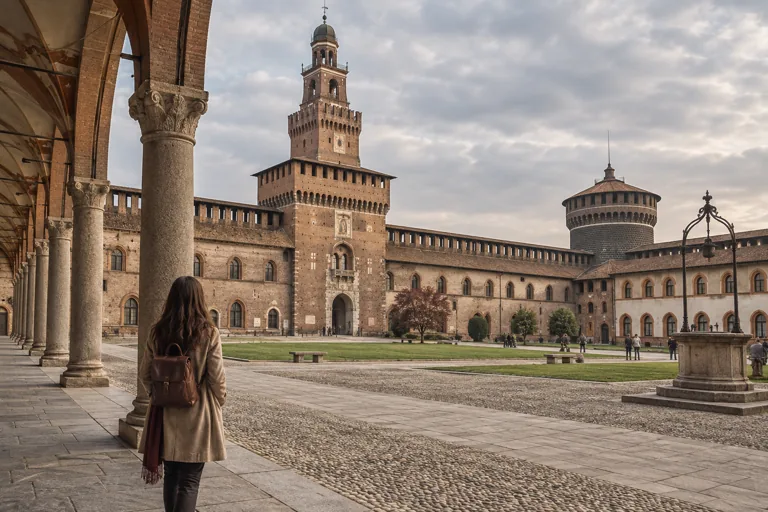
Leave a little space after the appointment. Sit with a coffee, take a modest walk or return to a notebook. Do not immediately compare the experience with a checklist of other masterpieces. If you want another historic setting later, the Sforza Castle guide offers a different way of understanding Renaissance Milan through buildings and patronage.
Our history experiences can help you compare formats, but inspect admission inclusions carefully. A city tour that discusses Leonardo is not necessarily a Last Supper reservation. The one-day planning guide keeps that distinction at the centre of the itinerary. When continuing to Florence, use Florence Tour Hub to plan its galleries separately: different works, buildings and access systems deserve their own preparation rather than a single universal museum strategy.
If a guide is part of your booking, prepare one question that genuinely interests you. It might concern a particular gesture, the room or the painting’s material history. Having a question makes the explanation more personal without requiring special knowledge, and it gives you a useful thread to follow when the limited viewing time begins.
Sources & further reading
Turn a good read into a great day.
Find a highly rated Milanese experience that brings these stories to life.
Explore related experiences →