How should you visit the Pinacoteca di Brera?
Visit the Pinacoteca di Brera with a small set of interests rather than a determination to give every painting equal time. A major collection rewards choices. Decide whether you want to look closely at a handful of works, follow a historical thread or learn through a guide’s explanation. That decision will shape a more satisfying visit than simply calculating how quickly you can pass through the rooms.
Check the current admission arrangements on the official website before planning the rest of the day. The museum’s entrance information distinguishes its ticket arrangements and associated spaces. Read what is valid for your selected purchase instead of assuming that every part of a wider institution follows identical rules. If you book through an operator, confirm the meeting point and included admission separately.
Arrive with one useful question
A question is a good antidote to museum fatigue. You might ask how painters create depth, how a hand communicates emotion, or how an ordinary object changes the mood of a scene. The question need not be original. It just needs to give your eyes a reason to pause. When several works become possible answers, a gallery starts to feel like a conversation rather than a sequence of famous names.
Do not feel obliged to read a long explanation before looking. Spend a moment with the painting first, then use the label to test or enrich what you noticed. This approach makes unfamiliar work more approachable and familiar work less automatic. Recognizing a reproduction is different from encountering scale, surface and color in a room with other people around you.
Remember that a collection has a history
The official palace guide connects the gallery’s origins with the training of students and describes its later development as a national collection. That is a helpful reminder that museums are made, not naturally occurring. Decisions about collecting and display influence the conversation between works, even when those decisions are no longer obvious to a casual visitor.
Look for information about where a painting originally belonged and what it was intended to do. A work made for a particular architectural or devotional setting may feel different in a museum room. You do not need to reconstruct the entire original environment in your imagination. Recognizing that an object once had another context already makes the present encounter more thoughtful.
Choose how you want to learn
A guide can connect works, explain unfamiliar visual conventions and help you use limited time. An independent visit gives you freedom to linger or change direction. An audio resource can sit somewhere between those approaches. Compare them according to your attention and interests, rather than assuming that the most detailed option will automatically be the most enjoyable.
For groups, agree on a modest shared priority and allow a little individual looking where practical. One person may love portraits while another responds to landscapes or architecture. A short exchange afterward can bring those experiences together. Trying to keep everyone equally fascinated by every object is usually less successful than making space for different kinds of curiosity.
Keep the neighborhood in the picture
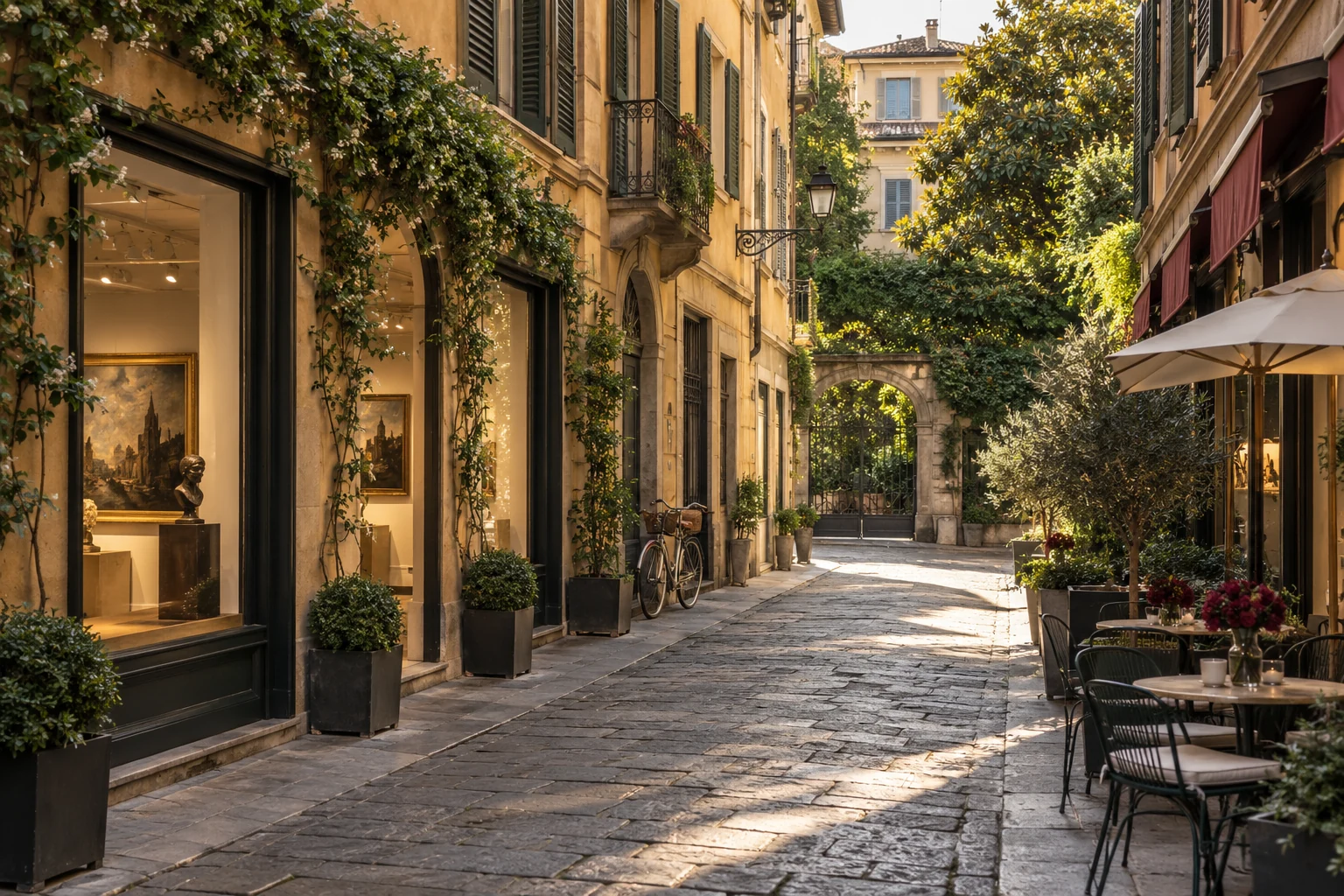
Brera’s streets can provide an easy transition out of concentrated gallery looking. Our neighborhood walk begins with the palace and broadens the setting without requiring another substantial admission. Give yourself time to sit, eat or write a short note about one painting. That pause often preserves the experience better than immediately joining another queue.
Browse arts and cultural experiences when comparing guided formats, and check that gallery admission is explicitly included. The Milan design guide offers a different visual language for another day. A thoughtful art itinerary allows contrast: paintings in one setting, designed objects in another, and ordinary city life connecting them. You leave with sharper attention rather than simply a longer list of rooms visited.
For a personal record, write down one visual detail before the artist’s name: a color relationship, the angle of a figure or a surprising patch of light. Naming the work later will then connect information to something you actually saw. This small habit makes museum notes more memorable than a list of titles alone.
Sources & further reading
Turn a good read into a great day.
Find a highly rated Milanese experience that brings these stories to life.
Explore related experiences →