How should you visit Milan’s Villa Necchi Campiglio?

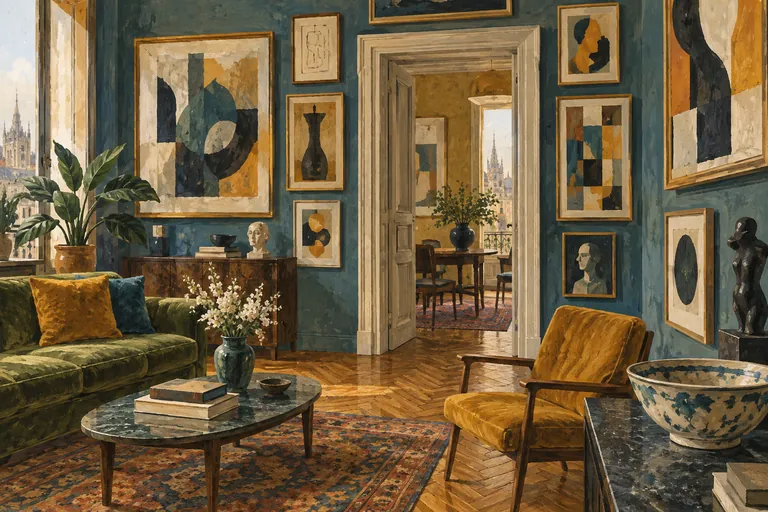
Villa Necchi Campiglio rewards a different kind of Milan sightseeing: looking carefully at how a house works. A doorway, a window fitting or the transition from a formal room to a garden can be as revealing as a painting. Give yourself permission to follow those small clues. You do not need an architectural vocabulary, and you do not need to turn every room into a photograph.
The FAI property stands at Via Mozart 14. Its official history identifies Piero Portaluppi as the architect of the house built between 1932 and 1935 for the Necchi Campiglio family. That places its original design firmly in twentieth-century Milan. A useful question for your visit is therefore not simply “Is this beautiful?” but “What did a comfortable modern home mean to the people who commissioned it?”
Start with the relationship between inside and outside
Before concentrating on individual furnishings, notice the edges of rooms: windows, doors and the direction of the light. Try looking through an opening from more than one permitted position. Does it frame a garden view, connect two social spaces or make a room feel more private? These are observations you can make yourself, rather than conclusions that require guessing an architect’s intentions.
The garden and pool belong to the property’s architectural story, but this is a museum visit, not an invitation to swim. FAI’s account also describes practical innovations such as an internal lift and a service tunnel. They prompt an interesting comparison between the spaces a guest would admire and the systems that helped a household function. Ask what the public route actually allows you to see; a historical description is not a promise of access to every feature.
Choose one material to follow
Portaluppi’s interiors combined carefully selected materials, including marble and walnut. Instead of trying to memorize a complete inventory, choose one surface and follow it through several rooms. Look at whether the same material feels different in bright light and shade, and whether a geometric edge makes it seem heavier or lighter. Keep your hands away from historic surfaces, however tempting an especially polished piece may be.
For a simple notebook exercise, draw the outline of a doorway without trying to reproduce its decoration. Then add only the strongest horizontal and vertical lines. This slows your eye down and turns a room into something understandable. Our guide to looking at everyday design in Milan develops that habit beyond the museum.
Let later changes complicate the story
A historic house is rarely one frozen moment. FAI documents changes by Tomaso Buzzi beginning in 1938, as well as art collections that became part of the house’s later life. Ask the room interpretation to help distinguish original architectural choices, subsequent furnishing changes and donated works. Different dates can coexist in a convincing room without all belonging to its first design.
This makes Villa Necchi a useful companion to Casa Museo Boschi Di Stefano. Both invite you to think about art in domestic surroundings, although their collections and visiting arrangements are separate. Choose one as your main appointment and treat the other as an optional addition on another day, rather than assuming that two house museums must be rushed into one morning.
Make the practical arrangements before the doorway
Check FAI’s current calendar, admission options and accessibility information before setting out. Temporary events and special visits can change the ordinary route. If you want an audioguide, check the current phone-based arrangements and bring charged equipment and personal earphones. For step-free access or specific mobility needs, describe your requirements to the property rather than relying on the presence of a historical lift.
Keep the next appointment loose enough to allow a quiet garden pause if access and weather permit. The Milan metro and tram guide can help you plan the journey from your actual accommodation. A ticket time is only the centre of a visit; getting there calmly and leaving without an immediate sprint matter too.
Use the house to sharpen the rest of your trip
Afterwards, choose one detail you would recognise again: a proportion, a wood grain or the way a window frames greenery. If your journey continues to Lake Como, the region’s silk story offers another way to connect affluent domestic taste with industry. That is a comparison across destinations, not a nearby extension of the museum route.
Browse Milan’s arts and culture experiences when deciding whether you prefer independent admission or a guided visit. Read the exact inclusions and meeting point before choosing. The best addition is one that gives you a perspective you want, while leaving enough time to notice the house itself.
Sources & further reading
Turn a good read into a great day.
Find a highly rated Milanese experience that brings these stories to life.
Explore related experiences →